Chronic back pain affects how you sit, sleep, work and move. The first step toward relief is understanding what may actually be driving it — and what your options are.
Understanding the condition
Back pain is considered chronic when it persists for more than three months. At that point, the mechanisms driving the pain may be fundamentally different from those of an acute injury — and require a different approach.
Chronic back pain is not simply an injury that hasn't healed. In many cases, the spine has structural changes that contribute to pain — disc problems, facet joint degeneration, spinal stenosis. In others, the nervous system has become sensitized, producing pain signals that persist even when tissue damage has resolved.
"An MRI can tell part of the story. It doesn't tell us how the pain is affecting your sleep, your work, or the things you want to get back to doing."
— James Lin, MD, CPMC Care
When pain becomes chronic
Duration > 3 months
Pain lasting beyond expected healing time signals a chronic process requiring specialized evaluation
Central sensitization
The nervous system can become sensitized, amplifying pain signals beyond what tissue damage alone would produce
Functional impact
Chronic back pain affects sleep, work capacity, exercise, and quality of life in ways acute pain typically does not
Requires specialist evaluation
Pain medicine specialists are trained to identify specific drivers of chronic pain and match treatment to cause
What may be causing your pain
Back pain rarely has a single cause. A thorough evaluation identifies which factors are contributing to your specific pain pattern.
Herniated, bulging, or degenerated discs can compress nearby nerves or alter spinal mechanics, producing localized or radiating pain.
The small joints connecting vertebrae can develop arthritis, causing localized back pain that often worsens with extension or rotation.
Narrowing of the spinal canal can compress the spinal cord or nerve roots, causing pain that worsens with walking or prolonged standing.
Irritated or compressed spinal nerves can produce radiating pain, burning, tingling, or numbness extending into the buttock or leg.
The sacroiliac joint connects the spine to the pelvis. Dysfunction here often causes lower back and buttock pain that mimics other conditions.
In some patients, the nervous system becomes sensitized and continues producing pain signals even after the original injury has healed — requiring a different treatment approach.
Recognizing the signs
Persistent lower back achingDull, deep pain that doesn't resolve with rest or over-the-counter medication
Pain radiating into the legShooting or burning pain traveling from the back into the buttock, thigh, or lower leg
Morning stiffnessSignificant stiffness upon waking that takes more than 30 minutes to ease
Pain with prolonged sitting or standingDifficulty maintaining positions that most people tolerate without discomfort
Numbness or tinglingAbnormal sensations in the back, buttock, or leg — often indicating nerve involvement
Sleep disruptionPain that wakes you at night or prevents comfortable sleep positions
Back pain has persisted for more than 3 months despite treatment
Pain is interfering with sleep, work, or daily activities
Physical therapy, medication, or previous injections provided only temporary relief
Pain radiates into the leg, or you experience numbness, tingling, or weakness
You are concerned about long-term reliance on pain medication
Your primary care physician has suggested a specialist evaluation
Our evaluation process
Imaging tells part of the story. Understanding how your pain affects your daily life tells the rest. Our evaluation considers both.
Detailed history of your pain — when it started, how it behaves, what makes it better or worse
Physical examination focused on your spine, neurological function, and movement patterns
Imaging (MRI, X-ray, CT) and previous treatment records reviewed in context of your exam
A personalized treatment plan explained clearly — with options, rationale, and your goals in mind
Treatment options
We begin with the most appropriate option for your condition and goals — not the most invasive.
Understanding your pain — including the neuroscience of why it persists — is often the most underutilized treatment available.
Targeted movement and strengthening address the physical contributors to pain. We write a directed rehabilitation plan and refer you to a physical therapist — then stay involved in how it progresses.
Appropriate medications balanced for effectiveness and safety — anti-inflammatories, muscle relaxants, neuropathic agents.
Epidural steroid injections, facet joint injections, and nerve blocks can reduce inflammation and confirm pain sources.
For facet joint pain confirmed by diagnostic blocks, RFA can provide longer-lasting relief by interrupting pain signals.
Our philosophy
We don't automatically choose the most invasive option. We start with the appropriate level of intervention for your specific diagnosis — and escalate only when warranted.
Many patients with chronic back pain benefit from a combination of approaches. A single injection without addressing movement, lifestyle, or nervous system factors often provides only temporary relief.
Insurance coverage
Most back pain evaluations and many treatment procedures are covered by Medicare and commercial insurance. We verify your specific coverage before scheduling.
Verify your coverage — (805) 557-7050Take this with you
A one-page overview of these options — what each one targets, when it's usually considered, and what's involved — plus questions worth bringing to your visit.
Download treatment overview (PDF)A closer look
One of the most common procedures for back pain that spreads into the buttock or leg. A small amount of anti-inflammatory steroid and numbing medicine is placed in the epidural space — the thin layer around the spinal nerves — close to where the irritation is.
About 15–30 minutes. Plan on roughly an hour at the clinic, including check-in and a short rest.
The skin is numbed first. Live X-ray guides the needle, and light sedation may be available.
St. Charles Surgical Center — 550 St. Charles Drive, directly across from our office
Same day. If you receive sedation, you'll need a driver.
Some patients notice improvement within days; for others it takes longer, and some need more than one injection. What an injection can and can't do
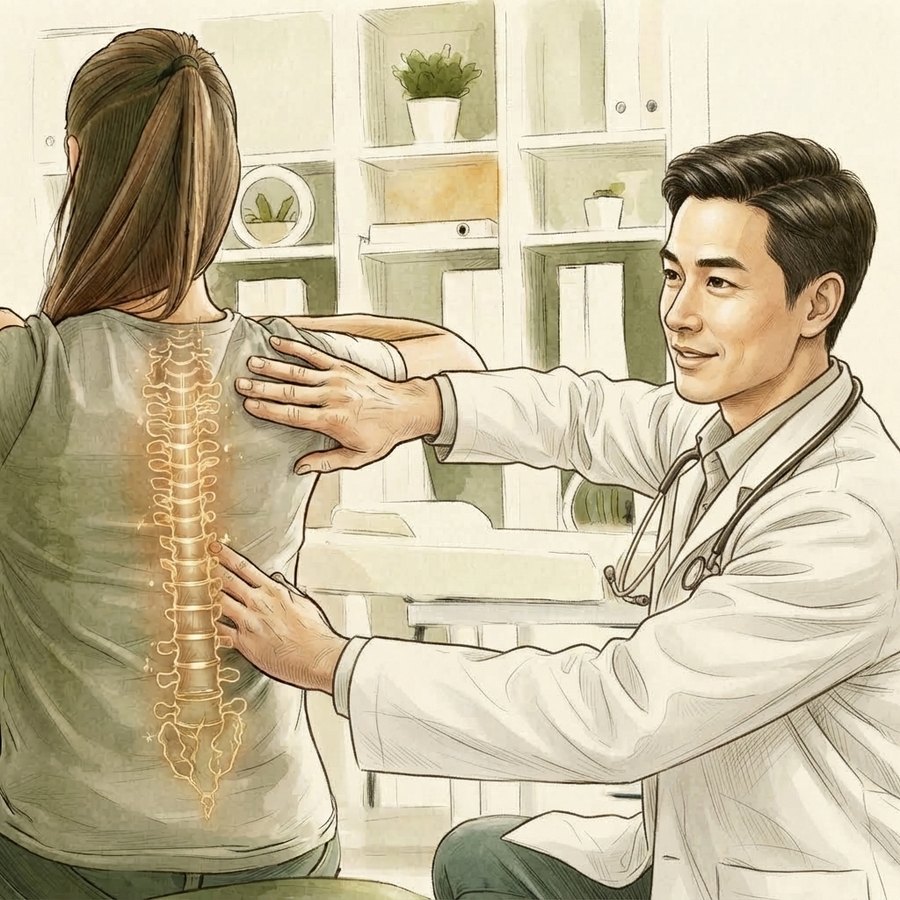
Spinal Cord Stimulation (SCS) is an advanced interventional option for carefully selected patients with chronic back pain who have not responded to other treatments. James Lin, MD evaluates SCS candidacy as part of a comprehensive pain management approach.
Ask about SCS candidacy — (805) 557-7050Common questions
Ready to take the first step?
James Lin, MD will review your history, evaluate your symptoms, and discuss what options may be appropriate for your specific situation.
(805) 557-7050Mon–Fri · 8:00 AM – 5:30 PM
558 St. Charles Drive, Suite 110, Thousand Oaks
Treatments for this condition