Pain medicine exists to fill that space. Below is the full range of what we offer — starting with the least invasive options, because that is where most patients should start.
Not finding lasting relief with conservative treatment?
Explore Spinal Cord Stimulation →
Treatment options
Most patients use more than one. Very few need all five.
For many pain conditions, targeted movement does more over six months than any injection. Physical therapy itself is delivered by a therapist we refer you to. What we add is precision: identifying what specifically needs to change, writing a directed plan rather than a general referral, and staying involved in how it progresses.
Reviewing what you are taking, what is working, and what is quietly making things worse. Nerve pain, inflammatory pain, and muscle pain each respond to different medications — the right match matters more than the dose.
Image-guided injections placed at a specific structure — a joint, a nerve, an inflamed nerve root. They serve two purposes: confirming where your pain is coming from, and relieving it. Both matter.
When a diagnostic block confirms which small nerve is carrying the pain signal, radiofrequency energy can interrupt that nerve for an extended period — often six months to two years. Offered only after the block confirms the target.
For low back pain coming from damaged vertebral endplates rather than the disc — deep, central pain that worsens with sitting and bending forward. One of the few back pain diagnoses confirmed by an objective MRI marker. Dr. Lin has performed this procedure for several years.
For persistent nerve pain that hasn't responded to other treatment — including pain continuing after spine surgery, CRPS, and painful neuropathy. Uniquely, you trial it first: about a week with a temporary external device before any decision about an implant.
For vertebral compression fractures caused by osteoporosis — a common, undertreated cause of sudden severe back pain in older adults. A same-day procedure that stabilizes the fracture and typically relieves pain within days.
Celiac plexus, stellate ganglion, lumbar sympathetic, ganglion impar, and hypogastric plexus blocks — for pain traveling through the autonomic nervous system: CRPS, cancer pain, chronic pelvic pain, and visceral pain that standard approaches don't reach.
For lumbar spinal stenosis where thickened ligament is crowding the spinal canal — the pattern where walking distance keeps shrinking and sitting brings relief. No incision, no implant, home the same day, and it doesn't close off surgery later.
For severe chronic pain — including cancer pain — where oral medication works but the dose required causes unacceptable side effects. Medication is delivered directly to the spinal fluid, at a small fraction of an oral dose. Tested before any implant.
A preparation made from your own blood, injected into a painful joint or tendon. Evidence is mixed and varies by condition, and it is generally not covered by insurance — we explain both before you decide.
For pain that has outlasted the injury that started it. Pain neuroscience education and nervous-system-focused care, informed by Dr. Lin's neuroscience training. A structured format is being developed — the principles are already part of every evaluation.
How we decide
There is no standard sequence that every patient moves through. A 45-year-old with six weeks of sciatica and a 78-year-old with fifteen years of knee arthritis need different things, and neither of them needs whatever we happen to offer most often.
What determines the plan is the evaluation: what structure is generating the pain, how long the nervous system has been carrying that signal, what has already been tried and how it went, and what you are actually trying to get back to. A patient who wants to return to competitive tennis and a patient who wants to sleep through the night are solving different problems, even with identical imaging.
Our general bias is toward the least invasive option that has a reasonable chance of working. That is not caution for its own sake — it reflects the evidence. For most musculoskeletal pain, conservative care produces comparable outcomes at twelve months with less risk. Procedures earn their place when a specific pain generator has been identified and conservative care has not been enough.
When a procedure is the right call, we will say so plainly and explain why. When it is not, we will say that too — including when the honest answer is that we do not yet know what is causing your pain and need to find out first.
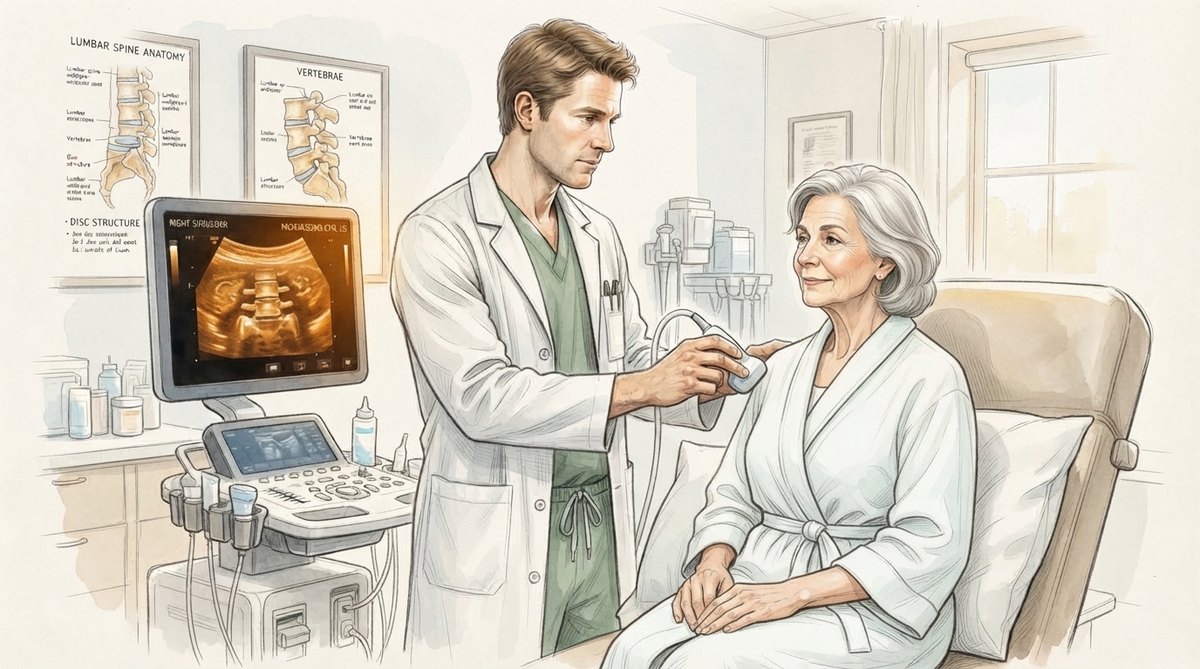
Four questions behind every plan
A joint, a nerve, a disc, a muscle — or a nervous system that has become sensitized
Six weeks and six years are different problems, even with the same imaging
Including what worked briefly and then stopped — that pattern is diagnostic information
Sleeping through the night, lifting a grandchild, returning to work — the goal shapes the plan
Common questions
Thousand Oaks, CA
That is what the evaluation is for. Call and we will start by figuring out what is actually going on.
(805) 557-7050Mon–Fri · 8:00 AM – 5:30 PM
558 St. Charles Drive, Suite 110, Thousand Oaks
Start from your symptoms instead
Browse by condition
Back pain, neck pain, sciatica, joint pain, headaches — each with the treatments most often used for it.
See all conditions →
All procedures carry some degree of risk, and no treatment works for everyone. The information on this page is general education, not medical advice for your situation. Before proceeding with any interventional procedure, you are entitled to a clear explanation of its risks, its alternatives, and what happens if you choose to do nothing — and you are always welcome to seek a second opinion.
Advanced option
Spinal Cord Stimulation (SCS) is an advanced interventional option for carefully selected patients with chronic back pain who have not responded to other treatments. James Lin, MD evaluates SCS candidacy as part of a comprehensive pain management approach.