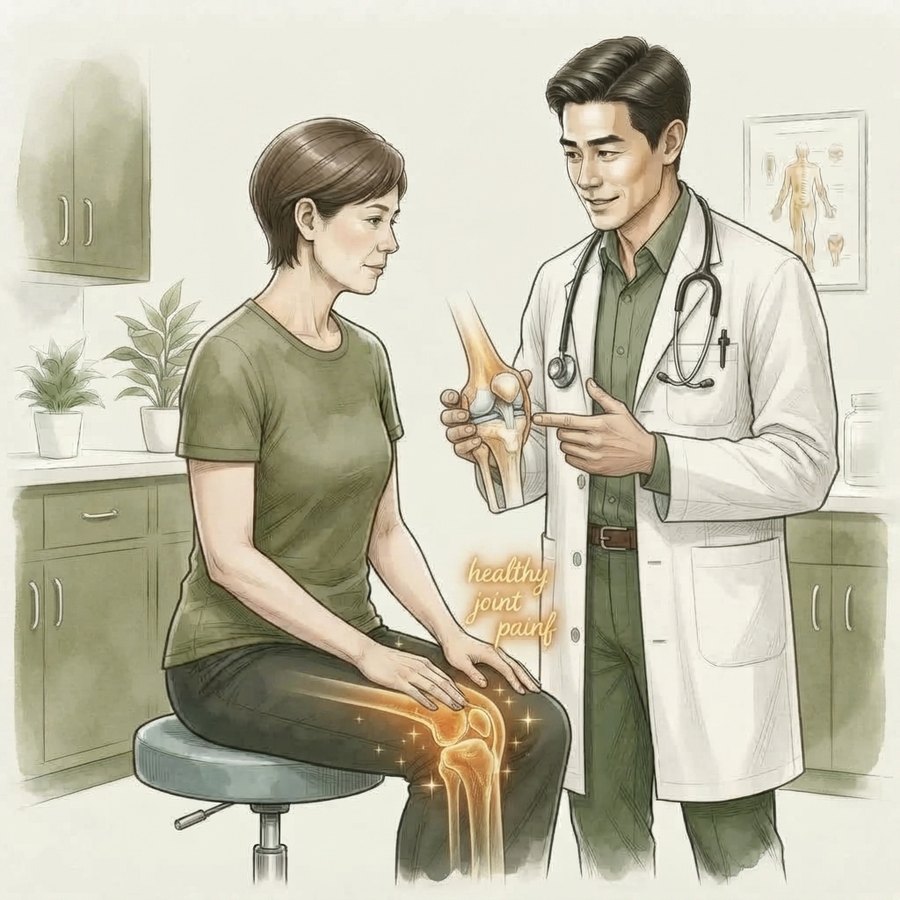
Joint pain that limits what you do doesn't have to be permanent.
Whether it's your knee, hip, shoulder, or spine — joint pain has specific causes and specific treatments. Understanding which applies to you is where we start.
Whether it's your knee, hip, shoulder, or spine — joint pain has specific causes and specific treatments. Understanding which applies to you is where we start.
Is this your pain?
Aching, stiffness, grinding, swelling — joint pain often has a specific character that changes with activity, time of day, or weather. These are patterns we recognize.
Stiff in the morning
Joints that feel locked or stiff after rest — easing with movement but returning after long periods of sitting
Pain with activity
Knee or hip pain that comes on with walking, stairs, or getting up from a chair — limiting how far or how long you can go
Deep aching at rest
Joint pain that doesn't fully ease when you stop moving — worse at night, disrupting sleep
Low back and buttock pain
Pain centered over the sacroiliac joint or lower spine — often worse with prolonged standing, rolling over in bed, or certain movements
Osteoarthritis, meniscal degeneration, patellofemoral pain
Osteoarthritis, trochanteric bursitis, labral issues
Arthritis, rotator cuff tendinopathy, AC joint pain
Sacroiliac joint dysfunction — often misdiagnosed as lumbar pain
Cervical and lumbar facet arthritis — contributing to neck and back pain
Osteoarthritis, inflammatory arthritis affecting small joints
If your affected joint isn't listed here, call us — we evaluate joint pain across the body as part of comprehensive pain management.
What could be causing it
The word "arthritis" covers many conditions. Identifying the specific type — and the specific joint — determines the most effective approach.
Gradual wear of joint cartilage over time — the most common form of arthritis, affecting knees, hips, spine, and hands. Pain typically worsens with activity and eases with rest early on.
The SI joint connects the spine to the pelvis. Dysfunction here causes lower back and buttock pain frequently misdiagnosed as lumbar disc or hip problems.
Rheumatoid arthritis, psoriatic arthritis, and related conditions involve immune-mediated joint inflammation — often managed in coordination with a rheumatologist.
Inflammation of the bursa sacs or tendons around a joint — causing localized pain with movement, common in the hip, shoulder, and knee.
Degeneration of the small joints of the spine — a common and treatable source of neck and back pain that often responds well to targeted procedures.
Arthritis that develops in a joint following previous injury, fracture, or surgery — accelerated wear from altered joint mechanics or damage to cartilage.
Beth Brown, PA-C · Ultrasound-guided injections
Beth performs ultrasound-guided joint injections at CPMC Care — allowing precise delivery of medication directly into the affected joint, with real-time imaging guidance for accuracy and safety.
How we evaluate it
Joint pain evaluation is more than reviewing an X-ray. We assess how the joint behaves, how it affects your function, and what has and hasn't worked before.
Which joint? What does the pain feel like — aching, sharp, grinding? When is it worst? What activities does it limit?
Physical assessment of joint range of motion, stability, tenderness, and surrounding structures — to match findings with symptoms.
X-ray, MRI, or ultrasound findings reviewed in the context of your examination — not as a standalone report.
Is this primarily structural — cartilage, bone, tendon? Or is there an inflammatory or neurological component? The answer shapes treatment.
A treatment plan matched to the joint, the cause, and your goals — starting conservatively, escalating only when indicated.
What treatment may look like
Many patients with significant arthritis manage effectively without surgery through a combination of targeted approaches.
Strengthening the muscles around a joint reduces load on the joint itself — one of the most effective long-term strategies for arthritis pain.
Anti-inflammatories, topical agents, and other medications — selected and monitored for effectiveness and safety over time.
Corticosteroid or hyaluronic acid injections delivered directly into the affected joint — performed with ultrasound guidance for precision.
Targeted injections for sacroiliac joint dysfunction and facet arthritis — often providing significant relief when the correct joint is identified.
For facet or SI joint pain confirmed by diagnostic injections — RFA interrupts pain signals and can provide longer-lasting relief.
Common questions
Thousand Oaks, CA
James Lin, MD and Beth Brown, PA-C work together to evaluate, diagnose, and treat joint pain — with ultrasound-guided procedures available in-office.
(805) 557-7050Mon–Fri · 8:00 AM – 5:30 PM
558 St. Charles Drive, Suite 110, Thousand Oaks
Related condition
Back & Spine Pain
SI joint and facet joint pain are among the most common causes of chronic back pain — and among the most treatable with targeted procedures.
Learn about back pain →
Treatments for this condition